MUSICAL FLUENCY & FREEDOM
THROUGH DAILY CREATIVE PLAY ON PIANO

sparked by Paris
🤍
Life, Love, Art,
& Café Culture


UNDERSTANDING THE MUSIC YOU LISTEN TO, LEARN,
PLAY, & CREATE


PLAYING AND IMPROVISING WITH COOL CONFIDENCE & EASE IN EVERY KEY


CONNECTING WITH AND CULTIVATING YOUR INNER WORLD & MUSICAL VOICE


MAKING NEW MUSIC MAGIC EVERY DAY IN YOUR HOME & YOUR LIFE
AS HEMINGWAY SAID:
MUSIC
(like Paris, but even more so)
IS A MOVEABLE FEAST.
(Okay, yes, I altered this slightly for my purpose, with permission, of course)
Music is meant to feed and fuel your soul, imagination, and your life, daily.
And not just as a consumer/spectator of other people's music making.
You are made of music, and you are meant to make your own music daily.
LET ME CUT THROUGH THE NOISE:
YOU HAVE TIME
to develop true musical understanding
AND to connect with your creativity
as you grow your piano skills.
Internalizing the language of music
through creative play on piano
will transform your musical life—for Life.
You and everyone in your house, making your home a culture of creative music making.
Spontaneous, Raw, Artful, Musical Magic.
I am SO totally in!YES, MUSIC IS A LANGUAGE.
And it is made from elements we have all
experienced and responded to
since before birth.
melody, harmony, rhythm
Yet it is common
for musicians, at all levels,
with years, or even decades, of formal musical training
(and endless scale practice)
to lack a
practical understanding of how music works
in order to sit down and
express a thought or feeling
on their instrument
instantaneously,
and without feeling the need to apologize for it.
To just play.
The way we do with words.
When we just — talk.
Whether you realize it or not,
as a human,
you are innately musical.
There is music in you.
Infinite music.
Inside of you and your children, too.
Just as there are infinite thoughts and ideas inside of us.
Some we say out loud, and some we like to hold inside.
Likewise,
We are fundamentally meant to express AND connect with
our own musical thoughts.
Daily.
And this pull we feel to just play, from within,
to just make music
with no script, no plan or map,
is our innate human nature.
Just as learning to perfectly recite Shakespeare sonnets
or lines from The Tempest
is not what language was made for.
These are worthy pursuits you can take on if you like.
But if you aren't fluent in English yet,
these won't just feel impossibly frustrating,
Shakespeare's genius will be lost on you.
The wordplay, meaningless.
Even if you can perfectly mimic the iambic pentameter.

And no amount of decoding and tediously memorizing
even more Shakespeare
will result in your fluency in English.
(Alack.)
But what it can do—
is make you feel like learning and understanding English is insurmountable.
Something that will always evade you,
forever out of your reach.
Something other people just seem to get, almost effortlessly,
but you...just don't.


So, how do we actually, really and truly become fluent in music?
SIMPLE.
We have to STOP
learning (and teaching) music
like it’s something other than what it is.
We have to actually, really, truly learn it,
and teach it,
like a language.

CONSIDER THIS
In the field of
Second Language Learning,
researchers and educators (including me) have documented and defined the most ideal environment for language fluency to develop, modeled after how children learn their first language.
A SUMMATION
To become fluent in language,
one needs:
repeated exposure to real, relevant, comprehensible language with
time & space
to absorb, ponder, experiment and PLAY
creatively
with the language,
expressing thoughts, feelings, and desires
without scrutiny or pressure to perform (or be profound)
within a living, breathing, authentic, and responsive environment.
So logical, right? And respectful.
Does this sound like your childhood piano lessons, or the way you learn music now?
Does your daily music making in your home feel like this?
What if it could? Can you imagine?
I can.
Let me show you just what I have in mind.
Welcome to the

Daily exploration and creative play on piano,
in every key, for everyone.
Slowly, artfully, & delectably!

for as many years as you like!
FIRST THINGS FIRST:
ABOUT PARIS CAFÉ CULTURE
historically, & as une métaphore parfaite (a perfect metaphor!)
Since their emergence in the 17th century, Paris Cafés have evolved as places to think, connect with others and exchange ideas, and equally connect with oneself, observe and reflect on life, art, culture, the world, plot revolutions, and, of course, nourish body and soul with hot food and one's creative mind with coffee!

What
the Paris Creative Piano Café
is exactly. And why.
The Paris Creative Piano Café is a vibrant & reflective online piano studio
where you can develop your chord fluency as well as explore your musical voice and thoughts on piano,
the way we learn language:
naturally, slowly, expressively,
with time to tinker, ponder, and explore freelymaking your daily life a culture of music making joy.
Through rich, meaningful and authentic musical offerings on the "menu" (daily improvisation, listening, and creative sparks), the relationships and connections between the chords in the context of each and every major and minor key are internalized.
In your hands, in your ear, and in your mind.
So that—in your life, no matter how you encounter or learn music—by listening, reading notation, playing from chord charts, tiktok, youtube, or making it up yourself—you can unlock it, get inside of it, and it can then become part of your ever-expanding inner musical universe.
Your own harmonic language, your musical voice, will emerge.
(Am I exaggerating, or romanticizing? I am not.
Music Making is Big Magic. And is meant for everyone.)




Here you may view
The Basic Fortnightly Menu
which will grow and evolve without doubt.
Times listed are Austin/CST (where I am now), but more can be added if this means you can only attend the Monday Labs at 3AM.

WHAT'S INSIDE.
THE BASIC WEEKLY MENU
TUESDAYS

KEY LAB | INVERSIONS LAB
Explore, map out, and play with the notes and chords of each key.
This weekly lab takes place LIVE in my Zoom room—
(or stream afterwards)
WEDNESDAYS - FRIDAYS
3 daily posts to spark exploration & connect you to your creative muse
morning, noon, & evening
(or you can do them anytime)
MORNING CUP
Guided exploration and improvisation posted early to open your day, your musical ear and acclimate your hands to the key!

LUNCH LAMP POSTS
Daily piano micro-pieces to learn to play by LISTENING. Each will feature a daily piano pattern and chord progression.

L'APÉRO
Creative collaborative music prompt
at 5PM
to close your day and open your night (whenever that may occur for you).
On (almost every) Thursday,
L'APÉRO is LIVE!
WEEKENDS
&
Anytime!

LE WEEK-END
Music Making Moments sparked by life in Paris in real time,
and the world at large,
for everyone in your house!
Who knows where we will go?
MUSEE • CINEMA • CABARET • OPERA • BALLET • CONCERTS • POETRY NIGHT • SALON

CAFÉ SOCIETÉ
Our Private Café Community where you will find everything as it is created each day! All questions you may have are answered here daily, and all epiphanies, however small they may seem are CELEBRATED.

From the Piano Room of Hollie Thomas
Coucou! I'm Hollie.
The Paris Creative Piano Café is the continuation of my Austin, Texas, independent piano studio, and is also the confluence of my lifetime of experiences and experimentation (so far) as a composer, classical and pop pianist, language and music educator, lifelong lover of harmony, coffee, and Paris—and a mom!
THE STORY OF MY STUDIO
As I mentioned before, when I opened my piano studio in 2003, I suspected that my studies in Language Acquisition and my decade of teaching immersive English would be instrumental in bringing forth the music within my students, but I never imagined how so very much.
As my studio grew, my own musical opportunities expanded as a pianist, and over the next ten years, I played, recorded and toured with composers and songwriters across genres, from modern chamber and ballet music to cabaret to pop & rock.
(Almost none of which included notated, written out piano parts—it was up to me to create what I would play :).
As I took on these adventures, questions emerged.
Taunting, torturing, cannot-sleep-at-night, questions like:
-
Could my students do what I do in a day, confidently and easily?
-
Could they play in a band, work out the chords and create their own parts to a song on the spot?
-
Could they compose or arrange their own music—without me?
No, not assuredly.
If they were going to be able to go in any musical direction they wanted in life, for all of these things and much more, what they needed most was real chord fluency, far beyond what they got from scales, cadences, playing repertoire, and just playing songs with chord charts.
As I pondered my students' plight, I began to see that my own accomplishments, awards and fun opportunities in music— only possible because of my deep and effortless understanding of music theory—were not the result of my work with my teachers or degrees, but 100% because of a pre-existing condition—my chord fluency.
Something I myself had developed completely on my own, alone at our old piano, in the two years that I was waiting (impatiently) for my first classical piano lessons to begin, before I learned to read music.
I had never valued it or that time, as no teacher had ever acknowledged or cultivated it further in me.
Anything off script was a distraction from their own agenda for my piano lessons—amassing repertoire and technique.
But now these were MY students—these living, breathing, curious and creative young music makers entrusted into my care. Their fluency in the language of music, and the creative freedom and agility it sparks, became my absolute TRUE NORTH for the next twenty years.
Through experimentation and imagination, my time with my students began to resemble a language classroom more than a piano lesson. As my agenda was no longer how to "get through" their repertoire pieces, their curiosity and creativity emerged.
I have found that internalizing music this way is only possible with the students at the helm, not the teacher, and as I created space for their own independence to surface, their musical lives grew beyond my wildest dreams. More importantly—they grew in the direction of THEIR dreams.
As the teacher/student relationship model dissolves, a creative collaboration emerges.
This is the story, and the mind and mindset, behind the Paris Creative Piano Café.
NOTES FROM
STUDIO FAMILIES &
MUSICAL COLLABORATORS

CHELSEA SMOCK
AUSTIN, TEXAS
Hollie is an absolute genius with all ages.
She understands deeply
pedagogy, technique, theory, child development, art, craft, discipline and fun.
She mixes all these elements together into an experience that draws forth pure magic.

SARAH TEALE
NEW BRAUNFELS, TEXAS
Louis would sit at the piano for several hours a day tinkering with how different notes and chords sounded.
It wasn’t long before we traded our old piano for a better one because his playing was quickly becoming the soundtrack of our family’s life, and the quality of his creations were outpacing the quality of his instrument.
Because of Hollie, Louis will grow up not only knowing how to play music, but what it looks like to be a creator and a lover of music for the rest of his life.

ROBERT HARRISON
COTTON MATHER | FUTURE CLOUDS & RADAR
I met Hollie when she joined my band Future Clouds and Radar in 2006.
Straight away, she set the standard for what I wanted henceforth in collaborators.
Her knowledge of music is surpassed only by her enthusiasm for it.
I doubt I’ve met anyone in my life who loves music more--or is more the committed to sharing it.
You are invited!

Follow your curiosity.
Let music fuel your life!
Feed your soul. DAILY.
(as you rock every chord in every key & grow your musicianship exponentially)
NOTE FROM HOLLIE
This is not a membership, but it does happen responsively in real time, live, with me and a vibrant private community of creative music makers like you!
If you join anytime before the end of September 2026,
you receive lifetime access to the café,
as it grows and changes for many years to come.
(It will always be in some sort of “beta”; always adapting).
Life is busy, and I want you to always be able to drop in and make music,
and not feel like you need to "pause" a subscription until you have more time.
You are always welcome. You won't be behind.

If this program and the approach to learning music is
not a fit for you at this time,
let me know within 7 days of purchase
and you will receive 100% of your money back.
No questions asked!
(but happy to hear your thoughts, of course!)
QUESTIONS?
What ages is this class for? Is it for children or adults, or both?
In this program, are we learning just the basic chords, or jazz chords?
What musical level should I be at in order to do this?
So what's so wrong with learning music by reading, or by watching someone and copying? Everyone has different kinds of brains.
Do you have a refund policy?
Isn't pairing the musical keys with the neighborhoods of Paris a little "out there"?
So, do you actually live in Paris, or are you just a dreamer?

Remember:
MUSIC IS
A MOVEABLE FEAST.
And I invite you to STOP starving yourself.
(Like, stop getting by on mass-produced fast food, musically.)
YOU HAVE TIME
For a rich, real musical life.
Once you possess chord fluency,
you can truly go any musical direction you dream of, freely.
The PARIS CREATIVE PIANO CAFÉ
is here for you!
I can't wait to hear the music you make.
w/love, Hollie
CONSIDER THIS TIMELY ANALOGY
PARLEZ-VOUS FRANÇAIS?
You just found out you are going to Paris for a year!
You will finally meet your true love and write poetry!
How do you prepare?
You immediately download the 100 most common expressions in French!
You can't imagine a situation you will be in that this list doesn't cover.
Piece of Gateau!
And you get to work memorizing the phrases--word for word--you are so careful to learn it exactly as written!
Then off you go to Paris!
Then guess what happens, Day One.
(I'm sure you know.)
As soon as anyone asks you a question about anything at all not on your list--
VOILA, you are très STUMPED.
You find the perfect youtube video which teaches 100 common phrases in French.
You are on top of this! You'll be ready!
Très Facile!
And you get to work memorizing the phrases-- with near-native pronunciation (quite impressive!).
Then off you go to Paris!
Then guess what.
(Yep.)
You're Sunk.
VOILA. Love is lost.
EFFORTLESSLY
UNDERSTAND THE MUSIC
YOU LISTEN TO, LEARN,
PLAY, & CREATE

AUDACIOUSLY
PLAY CHORDS WITH
COOL CONFIDENCE
IN EVERY KEY
CREATIVELY
CONNECT WITH AND CULTIVATE YOUR INNER MUSICAL VOICE.
JOYOUSLY
MAKE MUSIC MAGIC
EVERY DAY IN YOUR HOME
& YOUR LIFE
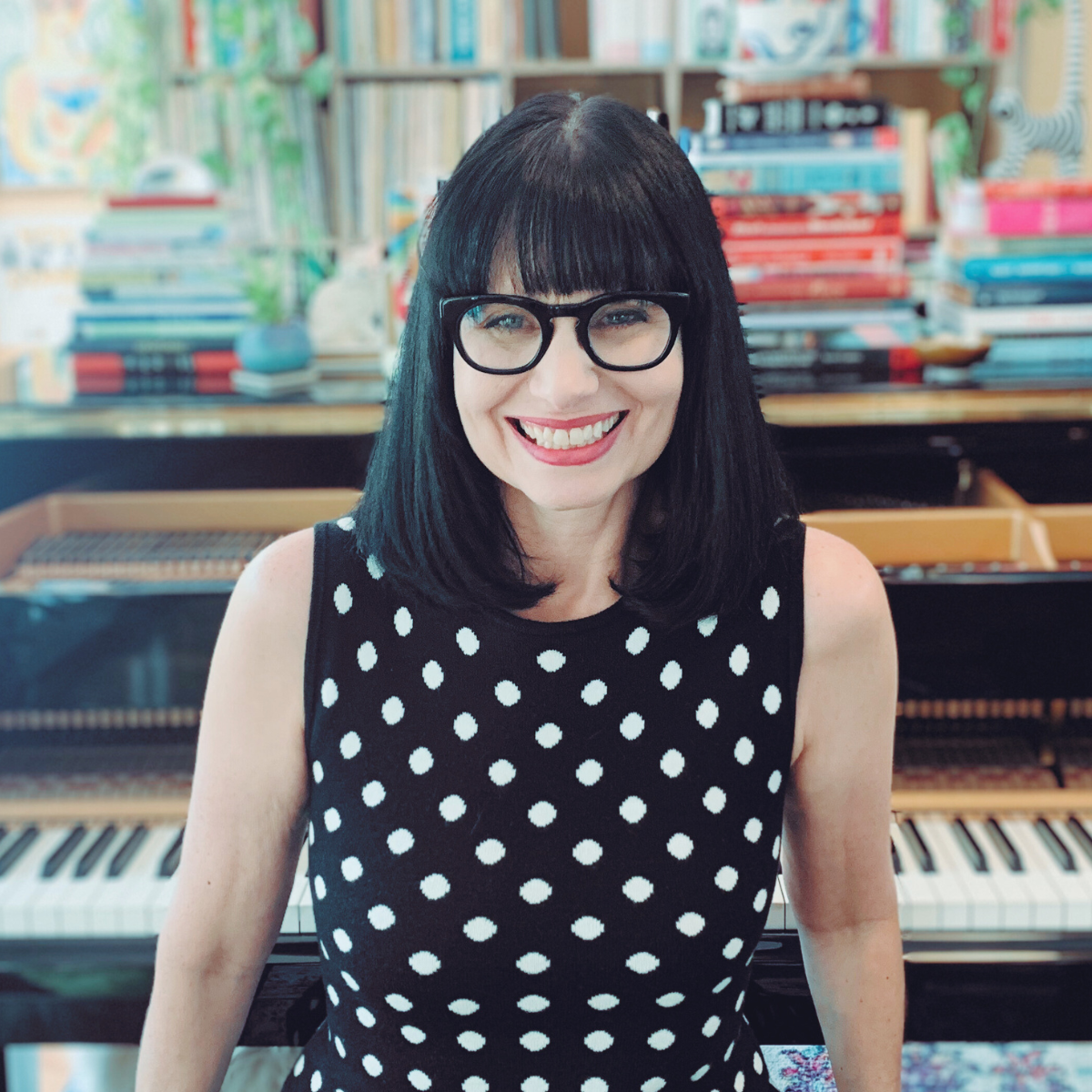
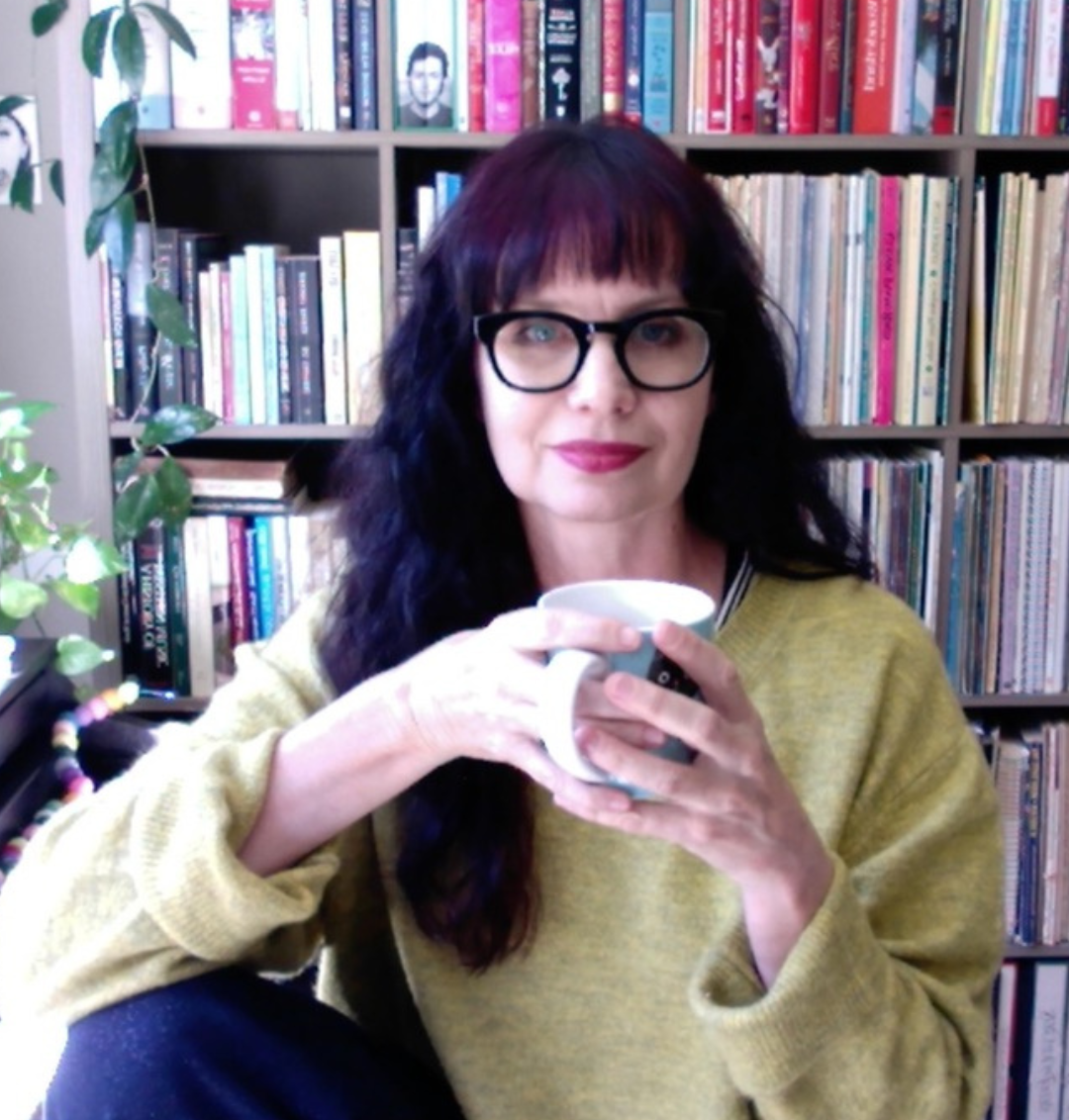
Hi, I'm Hollie!
I am une Americaine not quite in Paris.
But Paris, and the artful creativity that flourishes in the Paris café culture has been my lifelong muse and, interestingly, has emerged as an apt model and metaphor for the music learning environment into which I think the world of music education can evolve.
Big statement.
Okay, but, so, why am I going on about fluency? And why focus on "just" chords?
I'll come clean.
Before I made a big life leap to teaching and working only in music, I was a language teacher. And, so, for 10 fascinating years, I taught English fluency and literacy to immigrants and refugees in community centers and also to international university students intensively at the University of Texas in Austin.
But music was always pulling me.
When I opened my piano studio in 2003, I knew my experience and understanding of how humans learn language would help me teach music, because music is like a language, right?
Busy & Joyous.
My days and nights, filled now with only music, seamlessly flowed between sweet mornings alone tinkering and daydreaming at my piano, teaching music in the late afternoons, and practicing and expanding my own piano repertoire (a never-ending pursuit) in between.
So excited to share music with my students, I took seriously the task I had taken on: training them to “play” piano —or more accurately—conditioning their hands, minds and bodies to successfully perform the chosen music as the composers intended. And their skills and accomplishments grew, especially for those to whom reading music came easily.
Technique, repertoire, high audition scores, impressive recitals.
Happy, proud parents. Sweet moments.
Yet, something was missing. I just knew, they somehow weren't experiencing music they way I did.
But why not? I was giving them what I had longed for, begged and pleaded for, as a young teen, waiting two unbearable years for my parents to find me a classical piano teacher, so I could learn to read, play and understand the Bach and Beethoven I had fallen in love with (my most radical teenage act of rebellion!).
Meanwhile, more performing opportunities opened up to me on piano over the next years, playing in chamber ensembles, modern dance performances, cabaret, and eventually, recording and touring with pop/rock bands, something I had never dreamed of doing years before.
(By the way, almost none of these involved reading sheet music, or being handed a premade chord chart, but instead involved me working out what to play spontaneously, in real time, with other musicians doing the same. Things I’d never done before).
And with each new fun adventure, the questions inside me grew deafening:
-
Could my students do what I do in a day? Effortlessly and enjoyably?
And this lead to:
-
Are they developing what they would need to go in any new musical direction they decide to, now or later in life, as I have?
I decided to make them Chord Ninjas. We began working with only chords each summer, no music notation allowed. And not just 4-chord songs. The Beatles. I was serious! They took to it swimmingly and could soon take on any chord chart without hesitation, in all kinds of keys, and learn many by ear.
Still, it wasn't enough.
Their chord familiarity wasn’t necessarily carrying over to the other music they played. Their understanding of the harmonic structure of the pieces they were playing, just wasn’t automatic, as mine was.
But why not?
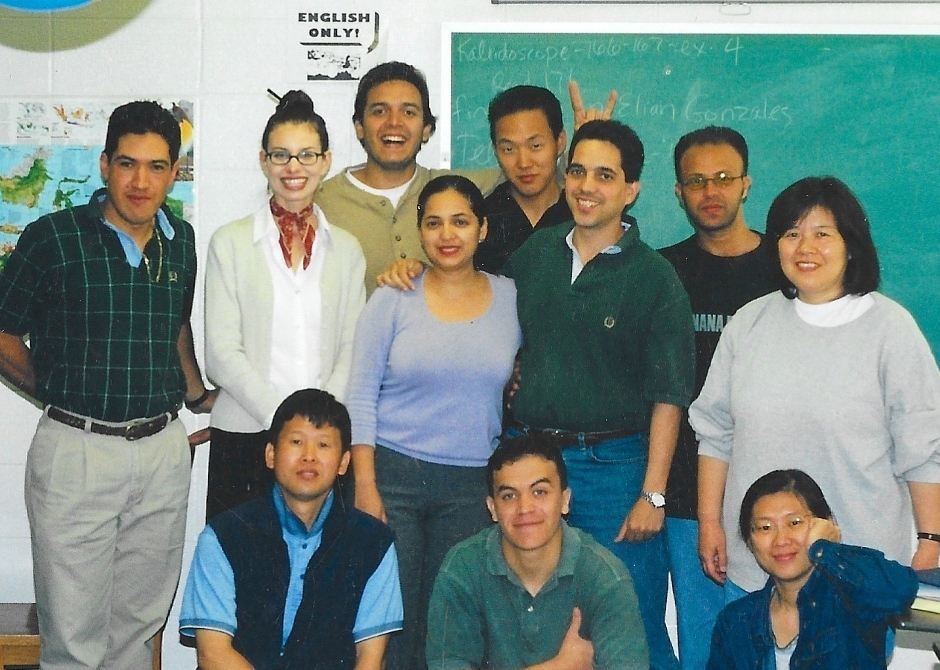
I began to understand that the ease and fluidity of my days as a musician, as well as my deep self-connection I found each morning at my piano were possible, not because of my classical piano studies, my degree, my composition skills and awards, or my diverse performing experience.
It was because I was fluent in music.
In fact all of the adventures I had gotten to experience in music,
and the confidence with which I was able to take them on,
were the result of my chord fluency in every key on piano.
So, how did I get it, this understanding that I didn't quite know how to give my students?
While I was waiting all that time for my parents to give me piano lessons, I was exploring on the piano. Freely.
I started with a few chords I had transferred from what I knew on guitar, and when I saw how it all worked, I began learning all the chords. Sitting at our old piano for hours, plinking around, I started to see how scales were made, how chords came from scales, and which chords belonged to which key. And how inversions (I didn't even know that word then) opened up their sound and how they felt.
I was insatiable.
I began to pick out chords in the songs I recorded off the radio, and write my own songs.
I was building my fluency, in my hands, and in my mind.
Day by day. In little private moments, alone.
What happened when I began my piano lessons? I took flight.
Yet, I never valued or thought about this, or what it instilled inside me until much later, as I only judged myself by my inability to play all Beethoven Sonatas or Bach Fugues yet.
As did my piano teachers.
But, my Students.
This is what my students were lacking. And what they needed was not more repertoire or technique or theory exercises. They had that.
What they needed they could only get by developing what I had in my daily morning habit of exploring and experimenting musically, but in their own lives, homes, and days.
I took myself to task—to craft a learning culture in each lesson I taught, each class, in each interaction through which I emanated and modeled this kind of exploratory and free relationship I had with music. Not as a warm-up before the real "work". This had to be the heart of the curriculum, from which they could follow whatever musical paths they were drawn to.
And my job became easier, but not at first. I could only help them learn by NOT showing them what to play, not saving them; they needed to work things through themselves. I had to hold back, be silent, when they were working through a chord progression tasked to find the closest inversion as they moved on to the next chord. I had habits to break. I was not the authoritative source anymore, but a guide, a fellow explorer.
They would only learn the musical independence I knew they needed if I basically, stopped "teaching".
Hmmm. How would that work? I tried to imagine.
And then, Behold.
The Whole Sky Cleared.
So obvious.
Like in a language classroom.
No— like a Language Café.
In a Language Café, often called a Conversation Café, language learners put their books away, and all the language “knowledge” within them becomes activated, in synchronicity, as they to express their own thoughts, feelings, and experiences in meaningful conversations, in their new language.
Suddenly all of my experience, research, fascination, and experimentation from my decade of language teaching, in which I crafted immersive, rich learning environments for my language students to build their fluency in — All of that— emerged in my brain…and my imagination.
And in that moment, I understood what to do. Which I now begin.
And that brings me here, and to you!
But music, don't you know,
is a dream from which the veils have been lifted.
It's not even the expression of a feeling, it's the feeling itself.
CLAUDE DEBUSSY
Obviously, learning Shakespeare as a young child, or before one is fluent in English or has any life experience, is ridiculous…and out of whack.
Yet, this routinely happens in music study, and maybe it has happened to you, as children often begin climbing the ladder toward playing the great musical repertoire and the technical and music literacy skills needed for it, without time or space to explore music for themselves, to play with it and mentally work it out in their own time—the way they play with toys and mud, with sticks and rocks, and with their first language.
On the flip side, music being taught purely by visual rote—watching and copying (even long classical pieces)—which has become the norm in online music instruction is creating a similar result as people learn to play songs and pieces without having any idea why they belong together.
Understanding music (AKA music theory) is deemed hard and unnecessary if you just want to play songs you like for fun. Why bother with it?
But again, reciting, copying, and mimicking, if done without understanding, do not lead to fluency or freedom.
It's a trap.
And the longer you are in it, the more you feel like music is something you will just never get.
Shouldn't you be able to sit down and just play by now?